
40 Dietary Profiles
“Covering medical conditions, all 14 EU allergens, ethical choices, life stage, and medication constraints”
Get personalised food scores in 1‑2‑3
Scan or search
Scan a barcode, photograph a meal or nutrition label, or type a query like “something savoury” or “low FODMAP snack”.
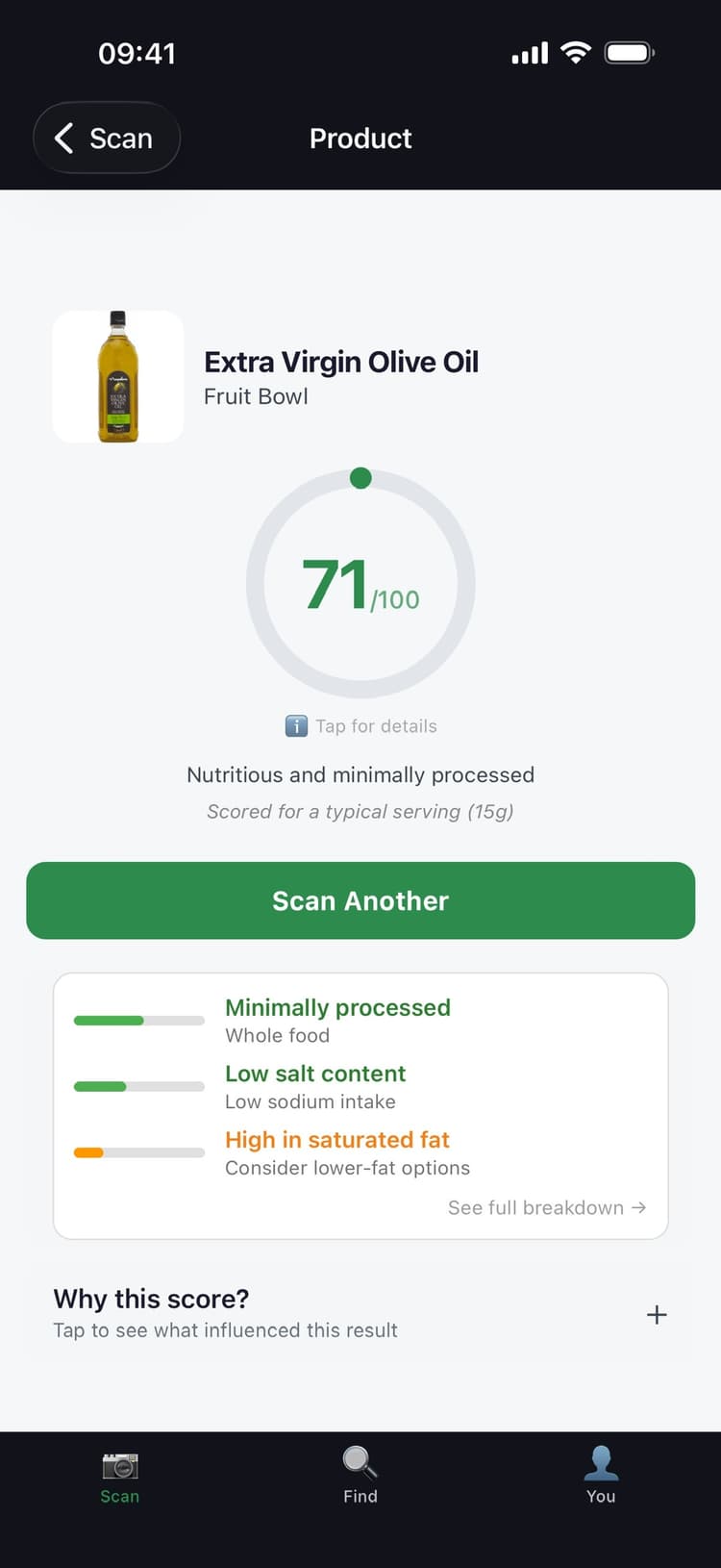
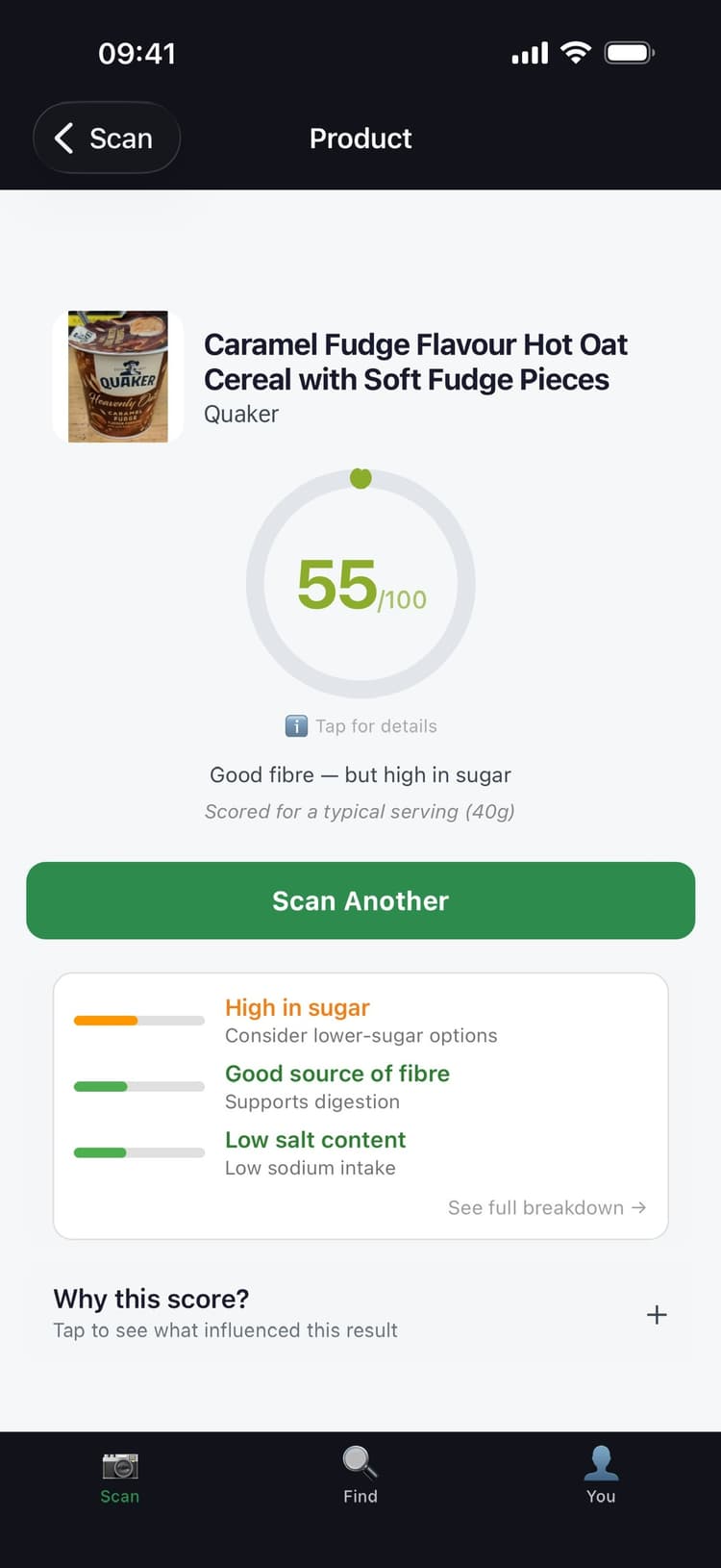
Get your personalised score
Receive a RAG score (0–100, Red/Amber/Green) with a clear explanation of why, tuned to your dietary profile.
Discover better alternatives
Find better options with smart swap suggestions across 28 food categories.
Scanning, discovery & more
Everything you need to understand your food choices, in one app.
Barcode scanning
Personalised RAG score with offline-first support for popular UK products.
AI photo scanning
Photograph a meal and get per-item and overall scores instantly.
Find Food
Natural language food search: "heart healthy dinner", "low FODMAP snack".
Offline scanning
Works without signal. ~120,000 UK products scannable offline: supermarket basements, the Tube, anywhere.
Our approach
Transparent, rule-based logic you can see
MyFoodFit uses transparent, rule-based logic rather than black-box recommendations, so reviewers can see how outputs are formed. The product is designed to support understanding of food choices, not to diagnose, treat, or replace professional guidance.
“The app helped me understand which products actually work for my dietary needs, rather than relying on generic health claims.”
Beta tester
Who MyFoodFit is for
Individuals
People who want to understand packaged foods without wading through complex labels or unclear claims.
Researchers
Academic teams interested in transparent, rule-based approaches to nutrition information and label interpretation.
Partners
Universities, public-sector programs, and innovation groups seeking early-stage collaboration on food literacy tools.
Q&A
What does MyFoodFit do?
How does scanning work?
What dietary profiles are supported?
What does MyFoodFit not do?
How is MyFoodFit different from other food apps?
Is MyFoodFit available outside the UK?
Research collaboration
We welcome conversations with university innovation teams, public health groups, and research collaborators who want to evaluate the approach, review the scoring logic, or co-design studies. We are actively partnering with Solent University on scoring validation.